
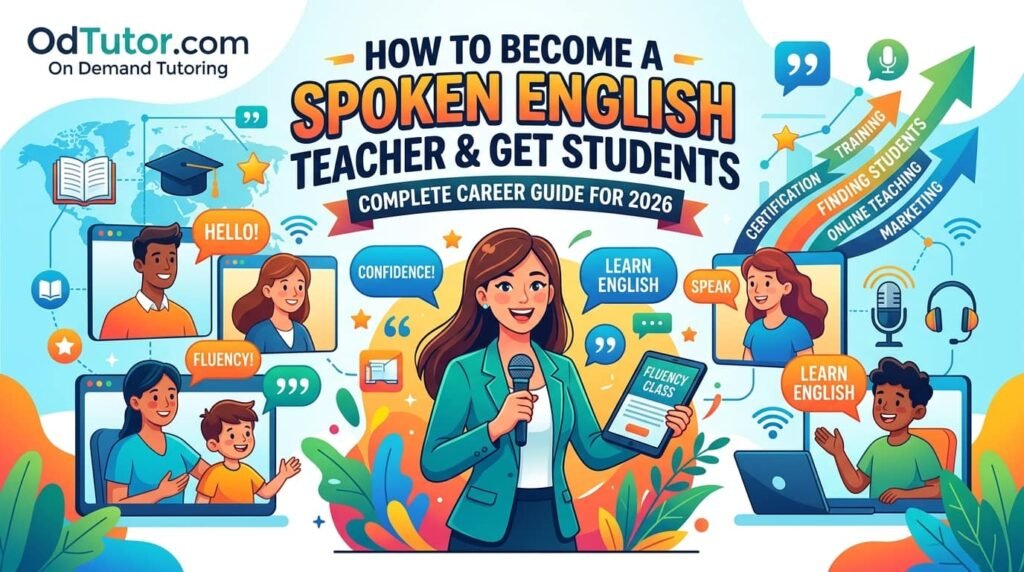
Hello Students and Aspiring Teachers,
English has become the global language of communication, business, education, and career growth. From school students preparing for interviews to working professionals seeking promotions and entrepreneurs looking to expand internationally, everyone wants to improve their spoken English skills. This growing demand has created excellent opportunities for skilled Spoken English teachers.
The best part is that becoming a Spoken English teacher does not always require an English Literature degree. If you possess strong communication skills, proper grammar knowledge, teaching ability, and a passion for helping others learn, you can build a successful career as a Spoken English trainer. Many successful trainers today started by teaching a few students online and gradually expanded their reach to hundreds of learners across different cities and countries.
However, knowing English and teaching English are two different things. A great Spoken English teacher understands students’ fears, identifies common mistakes, develops engaging lessons, and creates an environment where learners feel confident speaking the language. Along with teaching expertise, finding and retaining students is equally important for building a sustainable career.
In this guide, I will explain step-by-step how you can become a Spoken English teacher, build your personal brand, attract students, and establish yourself as a trusted English trainer in today’s competitive education market.
1. Develop Strong Spoken English Skills First
Before teaching others, you must ensure your own spoken English skills are excellent. Students expect a teacher to communicate clearly, confidently, and naturally. This does not mean you need a foreign accent. Instead, focus on pronunciation, fluency, vocabulary, grammar, listening skills, and conversation ability.
Start by reading English newspapers, books, blogs, and magazines daily. Watch English news channels, educational videos, TED Talks, and podcasts to improve comprehension and pronunciation. Practice speaking on various topics and record yourself to identify mistakes.
Work on common areas such as sentence formation, tenses, prepositions, vocabulary usage, and public speaking. Learn how native and fluent speakers structure conversations and express ideas naturally.
You should also understand the differences between formal and informal communication. Students often seek help for interviews, business communication, presentations, and everyday conversations. Therefore, your expertise should extend beyond basic grammar.
Remember that confidence is contagious. When students see a confident teacher, they become more comfortable speaking English themselves. Continuous learning and practice will help you remain updated and effective in your teaching journey.
A good teacher never stops being a student. Invest time every day in improving your communication skills and language proficiency.
2. Learn English Teaching Methodologies
Many people know English well but struggle to teach it effectively. Teaching requires structure, patience, and understanding of different learning styles.
Study various English teaching methodologies used worldwide. Learn about communicative language teaching, activity-based learning, role-play techniques, conversation practice sessions, and interactive learning methods.
Understand how beginners, intermediate learners, and advanced speakers require different approaches. A beginner may need grammar fundamentals and vocabulary building, while an advanced learner may need business communication training.
Create lesson plans that combine speaking, listening, reading, and writing activities. Use real-life examples rather than memorization techniques. Students learn faster when lessons are practical and relatable.
Incorporate games, storytelling, debates, discussions, and group activities. These techniques keep learners engaged and improve confidence.
Learning classroom management is equally important. Whether teaching online or offline, maintaining student engagement significantly impacts learning outcomes.
A skilled teacher identifies student weaknesses quickly and designs targeted exercises for improvement. Understanding teaching methodologies will make your classes more effective and improve student satisfaction, leading to referrals and long-term success.
3. Obtain Relevant Certifications
Although certifications are not always mandatory, they increase credibility and help attract students. Many learners prefer trainers who have professional qualifications.
You can pursue certifications in Spoken English, English Language Training, TESOL (Teaching English to Speakers of Other Languages), TEFL (Teaching English as a Foreign Language), communication skills, or public speaking.
Online learning platforms offer affordable courses covering English teaching methodologies, pronunciation training, lesson planning, and student assessment techniques.
Certifications demonstrate commitment to professional development and reassure students about your expertise. They also strengthen your profile when applying for teaching opportunities at coaching institutes, schools, training centers, or online platforms.
Apart from language certifications, consider learning presentation skills, personality development, interview preparation, and business communication training. These complementary skills increase your value as a trainer.
Display your certifications on social media profiles, websites, and professional portfolios. Potential students often compare trainers before enrolling.
Remember that certificates alone do not guarantee success. They should support your practical teaching skills and experience. Combining certification with excellent communication and teaching ability creates a strong foundation for a successful Spoken English teaching career.
4. Define Your Teaching Niche
One of the biggest mistakes new teachers make is trying to teach everyone. Successful trainers usually specialize in specific learner groups.
You can focus on school students, college students, job seekers, working professionals, entrepreneurs, homemakers, government exam aspirants, or corporate employees.
For example, job seekers need interview communication training, while professionals may require business English and presentation skills. Students preparing for competitive exams often need vocabulary enhancement and confidence-building sessions.
Choosing a niche allows you to create specialized content and targeted marketing campaigns. It also helps students identify you as an expert in their specific requirements.
Research market demand in your area and online platforms. Understand common challenges faced by your target audience and develop customized solutions.
As your expertise grows, you can expand into additional niches. However, starting with a focused audience helps establish credibility more quickly.
A niche-based approach often results in higher student satisfaction, better referrals, and stronger personal branding.
5. Create a Structured Spoken English Course
Students prefer organized learning programs rather than random lessons. Design a comprehensive curriculum with clear learning objectives.
Divide your course into modules such as grammar basics, vocabulary building, pronunciation improvement, daily conversations, public speaking, interview preparation, group discussions, and personality development.
Include assignments, quizzes, speaking exercises, and progress evaluations. Students appreciate measurable improvements.
Create beginner, intermediate, and advanced levels to accommodate different learners. Structured progression keeps students motivated and increases course completion rates.
Use practical scenarios such as job interviews, customer interactions, office meetings, presentations, travel conversations, and social networking situations.
Develop worksheets, practice materials, PDFs, and speaking challenges. These resources add value and enhance learning experiences.
A well-designed course differentiates you from trainers who teach without a clear framework. Professional course structure also enables future scaling through online classes, recorded courses, and training programs.
6. Build Your Personal Brand Online
In today’s digital world, students often search online before choosing a teacher. Building a strong personal brand increases visibility and trust.
Create professional profiles on social media platforms. Share English learning tips, grammar corrections, vocabulary lessons, pronunciation guidance, and communication strategies.
Publish short educational videos regularly. Video content helps potential students evaluate your teaching style and communication skills.
Consider creating a professional website showcasing your expertise, qualifications, testimonials, courses, and contact information.
LinkedIn can be particularly valuable for attracting professionals seeking communication training. Facebook and Instagram help reach students and local audiences.
Consistency is crucial. Posting valuable content regularly establishes authority and increases audience engagement.
A strong online presence works like a 24/7 marketing system, attracting students even when you are not actively promoting your services.
7. Start Teaching Small Groups
Begin with small batches of students rather than large classes. Smaller groups allow personalized attention and help you gain teaching experience.
Offer trial classes to friends, relatives, local students, or online communities. Collect feedback and refine your teaching methods based on student experiences.
Focus on delivering exceptional results. Happy students become your strongest marketing asset through referrals and testimonials.
Document student progress whenever possible. Before-and-after communication improvements make powerful promotional content.
As confidence and experience grow, gradually increase batch sizes or offer individual coaching sessions.
Starting small minimizes pressure and provides valuable practical experience. Every successful teacher began with their first student.
Teaching real learners helps you understand common challenges, improve communication techniques, and build confidence in your abilities.
8. Use Digital Marketing to Attract Students
Marketing plays a major role in acquiring students. Even excellent teachers struggle without proper visibility.
Create educational content on YouTube, Instagram, Facebook, LinkedIn, and WhatsApp communities. Share tips that solve common English-speaking challenges.
Optimize your content for keywords such as Spoken English Classes, English Speaking Course, Interview English Training, and Communication Skills Training.
Run targeted social media advertisements for local students and professionals. Small advertising budgets can generate significant inquiries when properly targeted.
Use Google Business Profile if you offer offline classes. Encourage satisfied students to leave reviews.
Email marketing, webinars, free workshops, and live sessions are effective lead generation methods.
Focus on providing value before selling. Educational content builds trust and positions you as an expert.
Consistent marketing efforts create a predictable flow of student inquiries and support long-term business growth.
9. Collect Testimonials and Success Stories
Social proof significantly influences enrollment decisions. Prospective students want evidence that your training works.
Request testimonials from satisfied learners. Ask them to describe their challenges before joining and improvements achieved after completing your course.
Video testimonials are especially powerful because they showcase real student transformations.
Display testimonials on your website, social media pages, brochures, and course landing pages.
Share success stories of students who improved interview performance, secured jobs, gained confidence, or enhanced workplace communication.
Authentic success stories build trust and reduce enrollment hesitation.
Encourage students to recommend your classes to friends and family. Referral marketing often produces the highest-quality leads.
A growing collection of testimonials strengthens your reputation and increases enrollment rates over time.
10. Scale Your Teaching Business
Once you establish a stable student base, focus on growth and scalability.
Launch online classes to reach learners beyond your city. Create recorded courses that generate income without requiring live teaching hours.
Offer specialized programs such as Business English, Interview Preparation, Public Speaking, Personality Development, and Corporate Communication.
Hire assistant trainers as demand increases. Build a team and expand course offerings.
Conduct webinars, workshops, and corporate training sessions. Businesses increasingly invest in communication skills development for employees.
Develop mobile apps, learning communities, membership programs, and subscription-based learning models.
Diversifying income sources increases stability and growth potential.
With proper planning, a Spoken English teaching career can evolve into a successful education business serving thousands of learners across multiple locations.
How Odtutor.com Can Help You Become a Spoken English Teacher
At Odtutor.com, aspiring Spoken English trainers can showcase their expertise and connect with students looking for quality language training. If you have strong English communication skills and teaching abilities, Odtutor provides an excellent platform to build your teaching career.
As a tutor, you can create your professional profile, highlight your qualifications, define your teaching specialties, and attract students from different locations. The platform helps increase your visibility while allowing you to teach online and grow your personal brand.
Whether you specialize in Spoken English, Interview Preparation, Business Communication, Personality Development, or Public Speaking, Odtutor can help you reach learners actively searching for guidance.
Become a tutor today, build your reputation, earn from your expertise, and make a positive impact on students’ lives through quality English education.
Conclusion
Becoming a Spoken English teacher is one of the most rewarding career opportunities in today’s education industry. The demand for English communication skills continues to grow among students, professionals, entrepreneurs, and job seekers worldwide.
Success requires more than language proficiency. Effective teaching skills, structured learning programs, personal branding, digital marketing, and student relationship management all contribute to long-term growth.
Start by strengthening your own communication abilities, developing teaching expertise, choosing a niche, and building an online presence. Focus on helping students achieve measurable improvements and continuously enhance your skills as an educator.
With dedication, consistency, and the right platform, you can transform your passion for English communication into a thriving teaching career that creates value for learners while generating a sustainable income.