Resistance in a Wire Simulator by Odtutor
R = \( \frac{\rho L}{A} \)
Understanding Resistance Using \( R = \frac{\rho L}{A} \)
This experiment demonstrates the relationship between resistance (R), resistivity (ρ), length (L), and cross-sectional area (A) of a material, as defined by the formula:
R = ρL / A
Objective:
The goal is to understand how resistance depends on the physical properties of a conductor.
Materials:
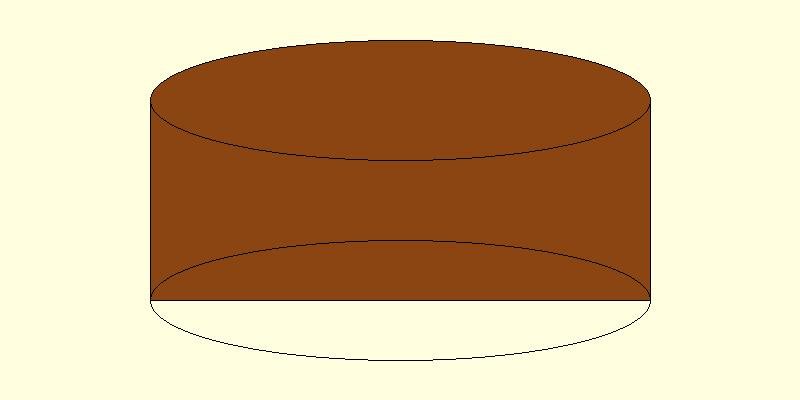
- A cylindrical conductor (e.g., a metal wire).
- Adjustable sliders representing:
- Resistivity (ρ) of the material.
- Length (L) of the conductor.
- Cross-sectional area (A) of the conductor.
Procedure:
- Resistivity (ρ): Adjust the resistivity slider to change the material properties. Higher resistivity implies more opposition to current flow, typical of poor conductors like rubber or glass, while lower resistivity corresponds to better conductors like copper or silver.
- Length (L): Increase or decrease the length of the cylinder. Longer wires offer greater resistance because electrons face more collisions as they travel through the material.
- Area (A): Modify the cross-sectional area. A wider area reduces resistance because more electrons can pass through simultaneously, decreasing congestion.
- Observe the resistance value (R) dynamically calculated using the formula.
Observations:
Resistance increases with higher resistivity and greater length, but decreases with a larger cross-sectional area.
Conclusion:
This experiment highlights how resistance depends on material properties and geometry. A good conductor should have low resistivity, short length, and a large cross-sectional area for efficient current flow. These principles are crucial in designing electrical systems, where minimizing resistance enhances efficiency and performance.
By manipulating the sliders, learners can visualize and understand the mathematical relationship between these variables in a hands-on manner.