
Introduction
As an IIT-level Mathematics educator with years of experience mentoring students across competitive exams, I have closely observed how learning methods are evolving at an unprecedented pace. Online tutoring, once considered a supplementary option, has now become the backbone of modern education. Students today are not just consuming content—they are engaging, interacting, and personalizing their learning journeys in ways that were unimaginable a few years ago.
In 2026, online education is no longer about recorded lectures and basic video calls. It is about intelligent platforms, adaptive learning systems, real-time feedback, and immersive experiences that cater to each student’s strengths and weaknesses. The shift is clear: students are learning smarter, not harder. Technology is helping them save time, improve accuracy, and build deeper conceptual understanding, especially in subjects like Mathematics and Science where clarity is crucial.
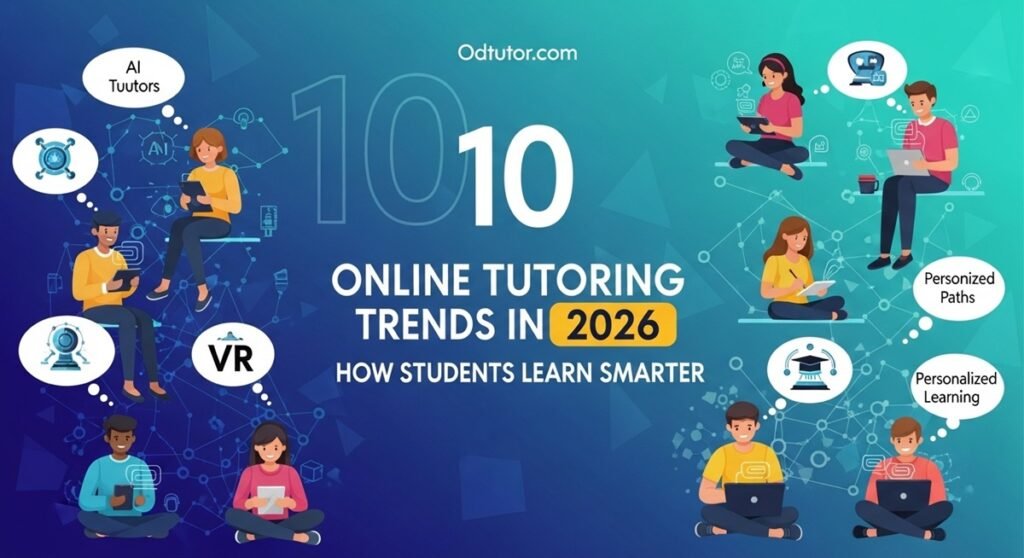
In this article, I will walk you through the top 10 online tutoring trends shaping the future of education in 2026. These trends are not just innovations—they are transforming how students prepare for exams like JEE and NEET, making learning more efficient, personalized, and results-driven.
Rise of AI-Powered Personalized Learning
One of the most significant trends in 2026 is the rise of AI-powered personalized learning systems. Unlike traditional classrooms where one teaching method is applied to all students, artificial intelligence now analyzes individual performance and creates customized learning paths. This means that a student weak in calculus but strong in algebra will receive targeted practice and explanations specifically designed for their needs.
These systems track accuracy, speed, and patterns in mistakes. Based on this data, they recommend questions, revise concepts, and even adjust difficulty levels in real time. For competitive exam aspirants, this is a game changer. Instead of wasting time on topics they already understand, students can focus entirely on improving weak areas.
From my experience, students using AI-driven platforms show faster improvement because they receive continuous feedback. It’s like having a personal tutor available 24/7 who understands your learning behavior better than anyone else.
Hybrid Learning Models Becoming Standard
In 2026, the line between online and offline education is almost gone. Hybrid learning models have become the new standard. Students attend physical classes for concept building and interaction, while online platforms are used for revision, practice, and doubt-solving.
This combination provides the best of both worlds. Classroom learning ensures discipline and structured teaching, while online tools offer flexibility and accessibility. Students can revisit recorded lectures, attempt quizzes, and analyze performance anytime.
For subjects like Mathematics, this model is extremely effective. A student can learn a concept in class and then immediately practice it through online modules. This reinforces understanding and reduces the chances of forgetting.
As an educator, I strongly recommend hybrid learning because it maximizes efficiency. It ensures that students are not dependent on a single method but benefit from multiple learning approaches.
Microlearning and Bite-Sized Content
Attention spans are decreasing, and students prefer learning in short, focused sessions. This has led to the popularity of microlearning—where complex topics are broken into small, easy-to-understand modules.
Instead of watching a one-hour lecture, students now prefer 5–10 minute videos focusing on a single concept. For example, rather than studying an entire chapter on differentiation, they can learn one rule at a time.
This approach helps in better retention and reduces cognitive overload. Students can quickly revise topics before exams without feeling overwhelmed.
Microlearning is especially useful for last-minute preparation. Short videos, quick notes, and rapid quizzes allow students to revise efficiently and improve accuracy under time pressure.
Gamification of Education
Gamification has transformed online tutoring into an engaging experience. Learning platforms now use points, leaderboards, badges, and rewards to motivate students.
This creates a competitive environment where students are encouraged to perform better. For example, solving questions correctly earns points, and consistent performance unlocks achievements.
Gamification also reduces stress. Instead of feeling pressured, students enjoy the process of learning. This is particularly beneficial for younger students and those who struggle with traditional teaching methods.
From my observation, students who engage with gamified platforms tend to practice more questions, which directly improves their problem-solving skills.
Real-Time Doubt Solving and Instant Feedback
In traditional setups, students often had to wait hours or even days to get their doubts resolved. In 2026, real-time doubt-solving has become a standard feature.
Students can now ask questions instantly through chat, video calls, or AI assistants. Many platforms provide step-by-step solutions within seconds, ensuring that learning is not interrupted.
Immediate feedback is equally important. When students solve a question, they receive instant analysis of their performance, including mistakes and alternative methods.
This helps in faster learning cycles. Students identify errors quickly and correct them before moving forward, which significantly improves accuracy in exams.
Interactive and Immersive Learning Tools
Online tutoring is no longer limited to static videos. Interactive tools such as digital whiteboards, simulations, and 3D visualizations are enhancing the learning experience.
For Mathematics, interactive graphs and step-by-step animations help students understand concepts deeply. Instead of memorizing formulas, they can visualize how equations behave.
Immersive tools also make learning more engaging. Students actively participate rather than passively watching lectures, which improves retention.
As a teacher, I find these tools extremely valuable because they bridge the gap between theory and application.
Data-Driven Performance Analytics
Another major trend is the use of data analytics to track student performance. Platforms now provide detailed reports on accuracy, speed, topic-wise performance, and improvement trends.
These insights help students understand where they stand and what needs improvement. For example, if a student consistently makes mistakes in coordinate geometry, they can focus on that area.
Parents and teachers also benefit from these reports. They can monitor progress and provide targeted guidance.
Data-driven learning ensures that preparation is strategic rather than random, which is crucial for competitive exams.
Peer Learning and Community Platforms
Learning is becoming more collaborative with the rise of peer learning platforms. Students can interact, discuss problems, and share solutions with others.
This creates a sense of community and reduces isolation, especially in online learning environments. Group discussions often lead to better understanding as students explain concepts to each other.
Peer learning also exposes students to different problem-solving approaches, which enhances critical thinking.
In my experience, students who actively participate in discussions develop stronger conceptual clarity and confidence.
Focus on Skill-Based Learning
Education in 2026 is shifting from rote learning to skill-based learning. Students are encouraged to develop analytical thinking, problem-solving skills, and real-world application abilities.
Online platforms now include case studies, practical problems, and application-based questions. This prepares students not just for exams but for future careers.
For subjects like Mathematics, this means focusing on understanding concepts rather than memorizing formulas. Students learn how to apply knowledge in different scenarios.
This trend is essential because competitive exams are also evolving to test deeper understanding.
Mobile-First Learning Experience
With the widespread use of smartphones, learning has become completely mobile-driven. Students can access lectures, quizzes, and notes anytime, anywhere.
Mobile apps are designed for convenience, allowing students to study during travel, breaks, or free time. This flexibility increases study hours without adding pressure.
Features like offline access, notifications, and quick revisions make mobile learning highly efficient.
From my perspective, mobile-first learning ensures that students remain consistent, which is the key to success in competitive exams.
Integration of Virtual Reality (VR) and Augmented Reality (AR)
The integration of VR and AR is taking online tutoring to the next level. These technologies create immersive learning environments where students can visualize complex concepts.
For example, in Mathematics and Physics, students can interact with 3D models and simulations. This makes abstract concepts easier to understand.
VR-based classrooms also provide a sense of presence, making online learning more engaging.
Although still evolving, this trend has immense potential to revolutionize education in the coming years.
Disclaimer
This article is for informational and educational purposes only. The trends discussed are based on current observations and evolving technologies in the online education industry. Individual learning outcomes may vary depending on the platform, teaching methodology, and student effort. Always choose learning tools and strategies that align with your academic goals and personal learning style.